- Weekly Brief by tut0ugh
- Posts
- Weekly Brief

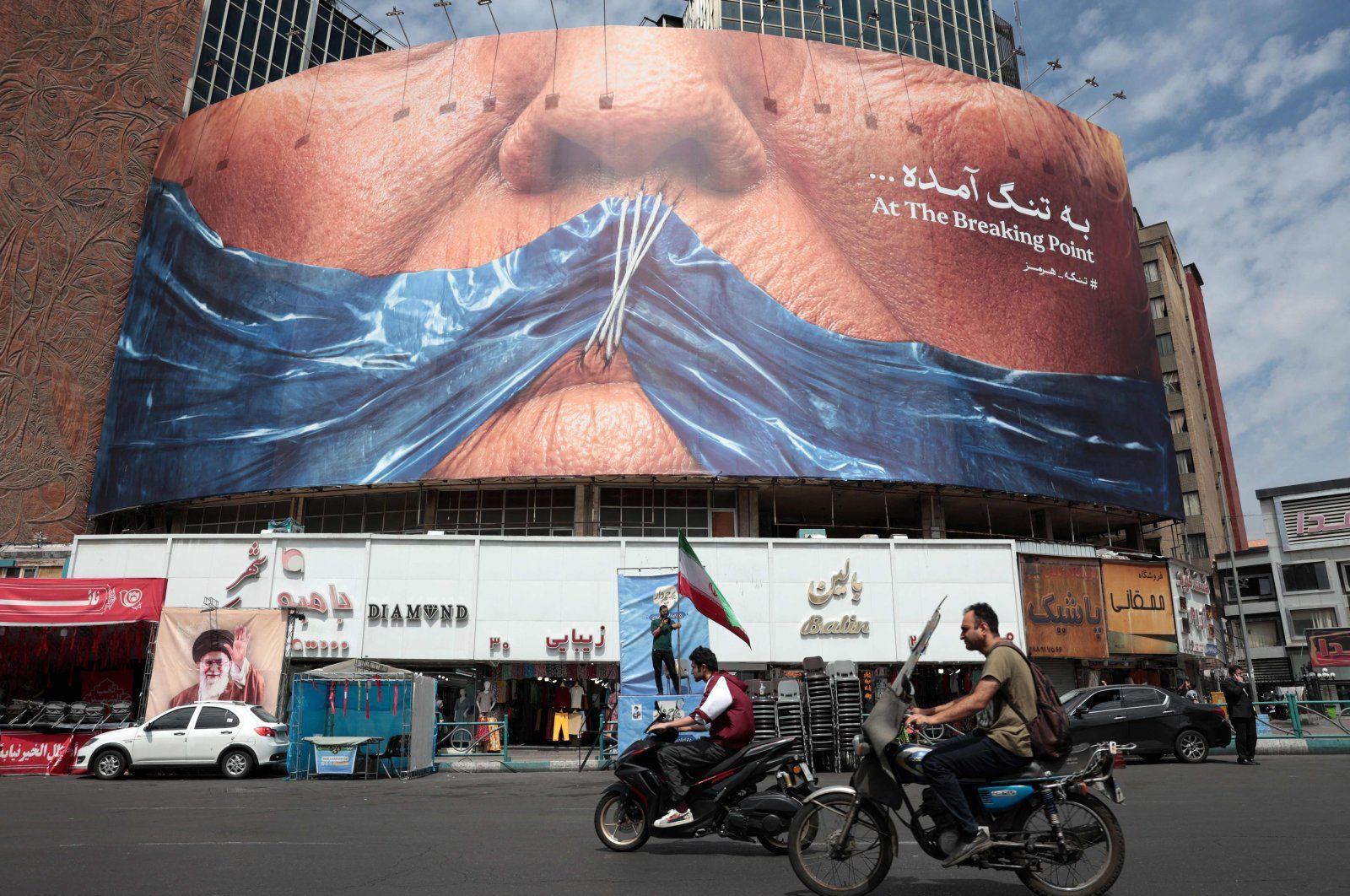
Welcome to this week’s Weekly Brief. This past week, US–Iran tensions persisted, global press freedom declined to record lows, defence spending hit historic highs, and shifts in trade, military posture and energy alliances reshaped geopolitical dynamics across Europe, Asia and the Middle East.
First time reading? Stay ahead of current events. Sign up here.
Feel free to send us feedback at [email protected]
US-Iran tensions persist as Tehran proposes phased deal over Strait and nuclear talks
US President Donald Trump said he had been briefed on a proposed deal with Iran, but was awaiting formal wording, while warning that renewed strikes remained a possibility if Tehran “misbehaves”.
A senior Iranian official said Tehran has submitted a proposal to reopen the Strait of Hormuz, end the US blockade of Iranian shipping, and defer nuclear negotiations to a later stage. The plan reportedly includes sanctions relief, asset releases, compensation, and a framework for future talks on uranium enrichment.
Speaking in Florida, Trump said he was not satisfied with the proposal and suggested Iran had not “paid a big enough price”. He reiterated that Iran must not obtain a nuclear weapon, while also acknowledging reluctance toward further military escalation.
The conflict, which has disrupted global energy flows and markets, follows weeks of suspended strikes by the US and Israel but no breakthrough in negotiations.
RSF reports global decline in press freedom in 2026 index
Reporters Without Borders (RSF) has warned of a significant global decline in press freedom in its 2026 World Press Freedom Index, citing rising political pressure, restrictive legislation and increased attacks on journalists.
RSF said more than half of countries are now classified as having a “difficult” or “very serious” media environment, marking the lowest global average in the Index’s 25-year history.
Norway retained first place for a tenth consecutive year, while Eritrea ranked last for a third year. The United States fell seven places to 64th, while Syria recorded the largest improvement, rising 36 places following political change after the fall of Bashar al-Assad.
RSF Editorial Director Anne Bocandé said expanding use of national security laws, lawsuits and censorship is driving a global erosion of press freedom.
US to withdraw 5,000 troops from Germany
The Pentagon has announced plans to withdraw around 5,000 US troops from Germany over the next six to twelve months following a review of American force posture in Europe, according to chief spokesman Sean Parnell.
Despite the reduction, more than 30,000 US personnel are expected to remain stationed in Germany, which currently hosts over 36,000 troops. The move comes amid heightened tensions between Washington and European allies over the US-led conflict with Iran.
German Chancellor Friedrich Merz recently criticised US strategy in the region, drawing a response from US President Donald Trump, who has also suggested possible troop reductions in Italy and Spain. Ramstein Air Base will remain a key NATO operational hub.
Global military spending reaches record $2.89 trillion in 2025, SIPRI says
Global military expenditure rose to a record $2.89 trillion in 2025, according to new data from the Stockholm International Peace Research Institute, marking the 11th consecutive annual increase in defence spending worldwide.
The United States remained the world’s largest military spender at $954 billion despite a 7.5% decline linked to reduced Ukraine assistance. Europe recorded a 14% rise to $864 billion amid the Ukraine war and NATO spending targets, while Asia and Oceania increased expenditure by 8.1% to $681 billion, driven largely by China’s military modernisation.
Russia and Ukraine also expanded defence spending during the conflict, with Ukraine allocating 40% of GDP to military expenditure. Researchers expect global spending to continue rising through 2026.
UAE announces withdrawal from OPEC and OPEC+
The United Arab Emirates (UAE) has announced its withdrawal from OPEC and OPEC+, effective from 1 May 2026, amid ongoing disruption linked to the Iran conflict and growing uncertainty over global energy markets.
UAE Energy Minister Suhail Mohamed al-Mazrouei said the decision followed a review of national production strategy and long-term energy policy, adding it was made independently without consultation with other member states.
The move raises questions over cohesion within producer alliances traditionally led by Saudi Arabia, particularly as security concerns persist around the Strait of Hormuz, a key global energy transit route.
Separately, Anwar Gargash, diplomatic adviser to the UAE president, criticised Gulf allies’ response to recent Iranian attacks, while US President Donald Trump has continued criticising OPEC over oil prices.
Trump raises EU auto tariffs to 25% amid renewed trade tensions
US President Donald Trump has announced plans to raise tariffs on cars and trucks imported from the European Union to 25%, accusing the bloc of “not complying with our fully agreed to Trade Deal”.
In a post on Truth Social on 1 May, Trump said the measures would take effect “next week” and apply to all EU vehicles entering the United States, while cars produced at “U.S.A. Plants” would face “NO TARIFF”.
He also cited over $100 billion in domestic automotive investment, describing it as a record in US manufacturing. The move signals renewed US-EU trade tensions over tariffs, industrial policy and market access.
Azerbaijan halts EU parliamentary engagement over ‘anti-Azerbaijani policy’ claims
Azerbaijan’s National Assembly has approved a resolution suspending cooperation with the European Parliament, citing what it described as continued “anti-Azerbaijani policy, slander, and smear activities”.
According to state agency Azertac, lawmakers said EU-related parliamentary platforms, including the EU-Azerbaijan Parliamentary Cooperation Committee and the EuroNest Parliamentary Assembly, had become instruments of political pressure against Baku.
The decision follows a European Parliament resolution supporting the return of Armenian residents to Karabakh. Azerbaijan’s Foreign Ministry rejected EU criticism regarding Karabakh, detainees and cultural heritage, describing the claims as “unfounded” and interference in internal affairs, while urging the EU to avoid actions undermining regional normalisation.
India and New Zealand sign free trade agreement
India and New Zealand have signed a free trade agreement in New Delhi aimed at expanding market access and strengthening economic cooperation amid global trade disruption.
The agreement was signed by Piyush Goyal, India’s Commerce and Industry Minister, and Todd McClay, New Zealand’s Trade and Investment Minister, following nine months of negotiations.
Under the deal, 95% of New Zealand exports to India will receive tariff reductions or elimination, while all Indian exports to New Zealand will gain duty-free access. The agreement also includes a $20 billion New Zealand investment commitment over 15 years.
Key sectors covered include textiles, engineering goods, horticulture and meat, as both countries seek to diversify trade ties amid tariff pressures, supply chain instability and regional energy disruptions.
Türkiye–Spain sign €2.6bn defence deal; China expands diplomacy with Australia, Kyrgyzstan and Laos
Türkiye and Spain have signed a €2.6 billion defence agreement for the export of Turkish Aerospace Industries (TAI)-built Hurjet jet trainers under an Airbus-led programme. The deal covers 30 SAETA II aircraft with training systems, logistics and maintenance, with deliveries between 2028 and 2035. Haluk Gorgun, Secretary of Turkish Defence Industries, described it as a model of NATO co-production, while Maria Amparo Valcarce Garcia, Spain’s State Secretary for Defence, said it would strengthen Spain’s strategic autonomy.
Separately, China and Australia agreed to deepen strategic communication and economic cooperation, with Wang Yi and Penny Wong discussing trade resilience, energy security and Indo-Pacific stability. China also reaffirmed military cooperation with Kyrgyzstan under the Shanghai Cooperation Organization, while expanding ties with Laos on trade, infrastructure and regional coordination.
Japan–Vietnam expand economic security ties; Greece–Qatar deepen strategic cooperation across energy and defence
Greece and Qatar have agreed to deepen cooperation across trade, energy and defence, expanding a framework established in 2024 following talks between Greek Prime Minister Kyriakos Mitsotakis and Qatar’s Emir Sheikh Tamim Bin Hamad Al Thani. Discussions centred on infrastructure, data centres and energy investment, alongside regional security issues including Iran, Lebanon and maritime stability in the Strait of Hormuz.
Separately, Japan and Vietnam pledged deeper cooperation under their Comprehensive Strategic Partnership, with Japanese Prime Minister Sanae Takaichi and Vietnamese Prime Minister Le Minh Hung prioritising energy security, critical minerals and supply chain resilience. Six agreements were signed covering infrastructure, climate, digitalisation and space, with bilateral trade rising 12.3% to $13.7 billion in Q1 2026.
Thanks for reading the tut0ugh Weekly Brief.
Stay informed—follow us on social media for daily updates on global events.
See you next week!
Reply